

How Cartoons Help Kids Learn New Words (Complete Guide for Parents)
How Cartoons Help Kids Learn New Words: A Complete Guide for Parents (2025)
Cartoons have become an everyday part of a child’s life. From colorful characters to funny stories and learning moments, cartoons capture a child’s attention in a way few other things can. But beyond entertainment, parents often wonder:
“Can cartoons actually help my child learn new words?”
The short answer is YES.
When used correctly, cartoons can become powerful tools for vocabulary building, language improvement, and communication development in children.
In this complete guide, we’ll explore:
- How cartoons improve vocabulary
- Psychological reasons kids learn faster through cartoons
- Best types of educational cartoons
- How parents can use cartoons for language learning
- Benefits, risks, and safe screen time limits
- Recommended shows for vocabulary growth
- Practical steps to improve word learning at home
Let’s dive into the world of cartoons and child development in a way every parent can understand.
1. Why Cartoons Help Kids Learn New Words
Children between 2 to 8 years are in their most active language-learning stage. This period is called the critical language development window. During this time, kids absorb new sounds, languages, expressions, and vocabulary much faster.
Cartoons help because they offer:
✔ Repetition of Words
Kids learn best when they hear a word repeatedly.
Cartoons repeat characters’ names, phrases, actions, and objects many times. This repetition strengthens memory.
✔ Visual Learning
Children understand words faster when they see them.
In cartoons, every object or action is visually displayed, making vocabulary easier to remember.
For example:
- “Ball” is shown as a bright, colorful ball
- “Run” is shown as a character running
- “Red” is shown as a red object
Visual + audio = strong vocabulary development.
✔ Slow and Clear Pronunciation
Cartoon characters often speak slowly and clearly, helping kids hear each syllable correctly.
✔ Fun Learning
Kids learn faster when they enjoy the process.
Cartoons create excitement, which improves memory and vocabulary retention.
2. The Science Behind Why Kids Learn Words From Cartoons
Researchers in child psychology and early education have found that:
⭐ Kids learn language best from stories.
Cartoons are visual stories with context, characters, and simple dialogues.
⭐ Visual memory is stronger in children.
Kids remember images better than text.
This is why cartoon learning is effective.
⭐ Emotions improve memory.
When kids laugh, enjoy, or feel curious—
their brain releases dopamine, boosting learning.
⭐ Multi-sensory learning works best.
Cartoons combine:
- Listening
- Watching
- Reading (sometimes subtitles)
- Understanding context
This boosts vocabulary 3x faster compared to normal teaching.
3. What Kind of Words Do Kids Learn From Cartoons?
Cartoons help children learn many types of words:
1. Everyday Vocabulary
- Eat
- Sleep
- Play
- Run
- Stop
- Go
2. Colors & Shapes
- Red, Blue, Yellow
- Circle, Square, Triangle
3. Emotions
- Happy
- Sad
- Angry
- Scared
4. Action Words (Verbs)
- Jump
- Shout
- Climb
- Laugh
5. Objects
- Bag
- Bottle
- Dog
- Car
6. Social Words
- Hello
- Thank you
- Please
- Sorry
7. Science or Educational Words
- Planets
- Animals
- Nature
- Weather
For English vocabulary building, cartoons are extremely helpful.
4. Best Types of Cartoons for Vocabulary Learning
Not all cartoons help with learning.
Parents should focus on educational and positive content that improves language instead of fast, noisy cartoons.
Here are the best types of vocabulary-building cartoons:
1. Educational Cartoons
These teach new concepts and repeat vocabulary.
Examples:
- Peppa Pig
- Dora the Explorer
- Paw Patrol
- Bluey
- Super Simple Songs
- Word Party
These shows use simple and clear English.
2. Interactive Cartoons
They ask questions like:
- “Can you say apple?”
- “Where is the red color?”
- “Let’s spell CAT.”
Kids respond and learn quickly.
3. Slow-Paced Shows
Slow cartoons help vocabulary more than fast ones.
Examples:
- Peppa Pig
- Bluey
- Daniel Tiger’s Neighborhood
4. Cartoons With Repeated Phrases
Kids repeat what they hear, so repeated phrases help a lot.
Examples:
- “Swiper, no swiping!” (Dora)
- “Let’s solve the puzzle!”
5. How Parents Can Use Cartoons to Teach Words
Cartoons can teach hundreds of words if used the right way.
Here’s how parents can maximize vocabulary learning:
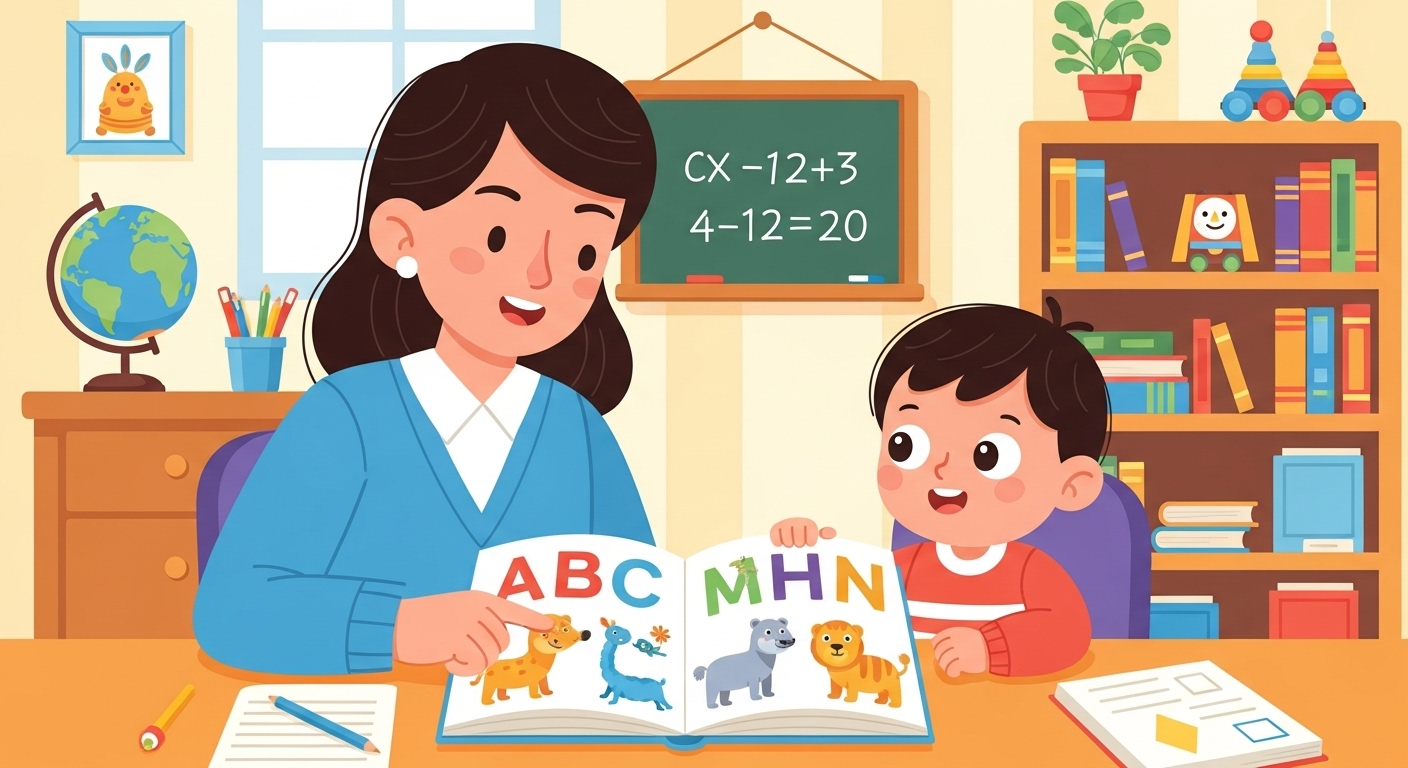
1. Watch With Your Child (at least 10 minutes)
Parents should watch together sometimes.
Why?
Because kids learn faster when someone explains or responds with them.
2. Ask Questions After an Episode
Example:
- “What color was the balloon?”
- “What did the dog do?”
- “Who said hello first?”
This builds memory + vocabulary.
3. Repeat Words Your Child Heard
If Peppa Pig says “apple,”
you can show a real apple and repeat the word.
Connecting real objects = better learning.
4. Choose English Subtitles
Kids learn spelling + pronunciation together.
5. Use Cartoons That Teach Themes
Like:
- Animals
- Colors
- Emotions
- Daily routine
Each theme improves a child’s vocabulary category-wise.
6. Create a “Cartoon Dictionary” at Home
A notebook where you write:
- New words
- Examples
- Pictures
Kids enjoy this activity.
6. Benefits of Learning New Words Through Cartoons
Cartoons improve more than just vocabulary. They help with:
✔ Better pronunciation
✔ Increased confidence
✔ Early reading skills
✔ Improved sentence formation
✔ Better understanding of emotions
✔ Faster brain development
✔ Improved listening skills
✔ Early communication skills
For kids who are shy, cartoons help them start speaking new words confidently.
7. Possible Risks (and How to Avoid Them)
Cartoons are good for learning—but only with balance.
Here are common risks:
❌ Too much screen time
❌ Fast-paced shows causing overstimulation
❌ Violent or adult cartoons
❌ Kids developing addiction
❌ Learning slang or wrong words
✔ The Safe Solution:
- Limit screen time to 30–60 min per day
- Choose slow, educational shows
- No YouTube auto-play
- Watch together occasionally
Balanced usage = no harm.
8. Recommended Cartoons for Vocabulary Building (2025 List)
Here is a safe and effective list:
Best for Toddlers (2–4 years)
- Peppa Pig
- Word Party
- CoComelon (educational songs)
- Daniel Tiger
Best for Kids (4–7 years)
- Dora the Explorer
- Paw Patrol
- Bluey
- Super Why!
- Sesame Street
Best for English Improvement (5–10 years)
- Octonauts
- Magic School Bus
- Sid the Science Kid
- Doc McStuffins
- Wild Kratts
These shows teach vocabulary + concepts + pronunciation.
9. Activity Ideas to Improve Word Learning After Watching Cartoons
Here are simple activities:
✔ Flashcards of cartoon characters
✔ Coloring pages related to words learned
✔ Reading storybooks from the same characters
✔ Acting out scenes from cartoons
✔ Asking the child to explain the story
✔ Drawing objects seen in cartoons
These activities boost vocabulary retention.
10. Final Conclusion: Do Cartoons Really Improve Vocabulary?
Absolutely YES.
Cartoons, when chosen carefully, can:
- Boost vocabulary
- Improve pronunciation
- Strengthen communication
- Enhance memory
- Build early reading skills
- Improve English fluency
The key is using educational, slow-paced, positive, language-focused cartoons — not random entertainment shows.
For parents, cartoons can become a wonderful tool to create a fun learning environment at home.
When used correctly, cartoons become more than entertainment —
they become a powerful foundation for your child’s language development.